DATSUN E12-27 Ignition Transistor Control Module Car Trk
fits make: Datsun. year: 1975–1978.
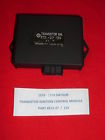
( Manufacturer Part Number: E12-27 ), ( Part Type: Ignition Control Module ), ( Country/region Of Manufacture: Japan ), ( Year: 1975 1978 ), ( Volt: 12v )
Review DATSUN Vintage Ignition Transistor Control Module Car Trk fits 1975–1978
The 1975-1978 Datsun E12-27 Ignition Transistor Control Module is a crucial component for maintaining the electrical efficiency and smooth operation of your classic Datsun car's ignition system. This transistor control module is designed to regulate the spark timing and ignition sequence, ensuring optimal engine performance and fuel efficiency.
The E12-27 module is a compact, yet robust device, typically mounted on the engine's distributor or ignition system. It houses a series of transistors, diodes, and resistors that work in harmony to manage the electrical signals to the ignition coil and spark plugs. The module's primary function is to control the timing of the spark, which is essential for proper combustion and engine performance.
The E12-27 module is known for its simplicity and reliability. It is a mechanical-less design, eliminating the need for points and condenser, which were common in older ignition systems. This design provides improved ignition system performance and durability, reducing the need for frequent maintenance and replacements.
When shopping for a replacement E12-27 module, it's essential to look for a high-quality part that meets or exceeds the original equipment manufacturer (OEM) specifications. A well-constructed module will feature heat-resistant materials, sealed connectors, and robust wiring to ensure long-term reliability and performance.
Installing the E12-27 module is a straightforward process for most DIY car enthusiasts. However, if you're unsure about the installation process or have any concerns, it's always a good idea to consult your vehicle's repair manual or seek assistance from a professional mechanic.
In summary, the 1975-1978 Datsun E12-27 Ignition Transistor Control Module is an essential component for maintaining the performance and reliability of your classic Datsun car's ignition system. Its simple yet robust design, combined with its ease of installation, makes it an excellent choice for Datsun owners who value the originality and reliability of their vehicles.
Pros of buying a 1975-1978 Datsun E12-27 ignition transistor control module:1. Availability: These parts are relatively common and can be found on various online marketplaces and automotive parts stores.
2. Replacement Cost: Compared to newer models, the price of the E12-27 ignition transistor control module is typically lower, making it an affordable option for some car owners.
3. Easy Installation: The module is usually a straightforward replacement, requiring minimal mechanical skills.
Cons of buying a 1975-1978 Datsun E12-27 ignition transistor control module:1. Parts Quality: The age of the part may lead to lower quality components, potentially resulting in a shorter lifespan.
2. Compatibility Issues: While this part should fit most 1975-1978 Datsun E12 models, there may be compatibility issues with newer vehicles or models with different ignition systems.
3. Difficulty in Finding OEM Parts: Original equipment manufacturer (OEM) parts for these older cars can be challenging to find, and non-OEM replacement parts may not perform as well or have the same fit and finish.
Conclusion:Buying a 1975-1978 Datsun E12-27 ignition transistor control module can be a cost-effective solution for older Datsun vehicles with ignition problems. However, potential compatibility issues and lower part quality may require careful consideration. If possible, it is recommended to seek out OEM or high-quality replacement parts to ensure optimal performance and longevity.
Details:
This is a used take-off from running 1978 Datsun pickup that was parted out. 20 through the USPS.
Total shipping and handling charges for this item is 7. Datsun transistor ignition control module part E12-27 12v this is a electronic module for passenger cars and trucks also 280z many other vehicles. Look at the pictures closely, as they are part of , ask any questions before buying.
part #: e1227 prices
- $99.99-$300.00
specifications ignitiosyste:
- for makes: Datsun
- for years: 1975-1978
- mpn: E12-27
- part type: Ignition Control Module
- country/region of manufacture: Japan
- year: 1975 1978
- volt: 12v
Seller ignitiosyste:
- city: Grants Pass, Oregon
- zipcode: 97527
Ratings:
- that was fast 10-23-17
- Nice condition tool for used. Super fast free shipping! One of my smoothest buys 10-20-17
- Super fast free shipping! Nice tool for used, well maintained. Would buy again! 10-20-17
- Received package today, very satisfied, thank you very much. 10-20-17
- Great deal! Fast shipping! Great communication! 10-15-17
Shipping ignitiosyste:
- type: Flat
- handling: 3 days
- cost: $7.2
Returns ignitiosyste:
- time: 14 Days
- details: Item must be returned in the exact same original condition as when it was received, in its original packaging, undamaged or altered in any way, shape or form - no exceptions. Buyer pays return shipping.
- policy: returns accepted
- type: Money Back
- paid by: Buyer
General ignitiosyste:
- in stock: Yes
- condition: Used
- motors > partsaccessories > vintage cartruck parts > ignition systems vintage car truck parts
Payments ignitiosyste:
- PayPal
Offer ignitiosyste:
- Started: October 23, 2017, 9:09 pm
- quantity: 1
- best offer: false
- bids: 0
- Sold: 0
Datsun E12-27 Is Similar To:
- 01134 Bosch Nos Ignition Points For Vintage Honda Datsun Subaru Luv (20.6% similar) New old stock set of ignition points for various vintage Honda, datsun, Subaru and Chevy Luvs vehicles...(August 24th, 2018)
- 13-5001 Datsun Nors Ignition Coil Resister Thru (43.7% similar) You are buying one unit. This part number is shown to replace datsun U2010. Looking for a hard-to-find part your antique vehicle. Buyer to pay shipping. Ignition coil resister - datsun 1974 thru 77 this is a new old replacement stock resistor assembly marketed by guaranteed parts company and made ...(April 13th, 2018)
- 20-5010 Ignition Point Sets Datsun Hunda Mazda Subaru Gp Poweready (24.5% similar) DATSUN1965 r,j, from Eng ,521 J13 200SX,620,F10,EXC. SUBARU1966-75 all. Dual point use 2 PCs,excl. Mazda all ,2000 Eng. HONDA1972-79 accord,civic,CVCC, auto Sta. Us buyer pays, 1237 cc Eng,Canada sedan,coupe wagon ,710,B210 excl. New old stock, 5 sets points, datsun,Honda,Mazda,Subaru fits these ...(October 13th, 2018)
- 22473-y4000 Datsun Ignition Plug Wire Holder Bracket Rare Nos New (36.2% similar) Correct Nissan replacement for all 240ZS and 260Z'S. The black plastic plug wire holder clamp snaps onto it. New datsun plug wire holder bracket. Very hard-to-find I gladly combine items to save you shipping costs. Part: 22473-Y4000 formerly E3000. No longer available from Nissan. Nissan packaging ...(October 15th, 2018)
- 24-5003 Vintage Datsun Ignition Coil Gp (50.6% similar) 11 H7900,01,10,11, N7100,01,10,11, R5600,01,10,11, R800,10, U6702,12,U7209,W5010. Calif ,710, B210 us buyer pays Nissan excl. New ignition coil fits datsun 62MM , oem S3101,S3111,U2010,U2200,U2210, 22448-H7051, H7206,07,08,16,17,H7500,H7510. B210 oem N7111, r 5600,5601,10,11,5800,10, U6702,12,U7209,...(January 11th, 2019)
- 25150-12200 Oem Datsun Rare Roadster Ignition (54.1% similar) Datsun rare datsun roadster ignition switch w lion griffin keys fits the 1962 to 67 fair lady roadster 3 prong connectors off, run, start. This is an original datsun ignition switch with a very, very rare lion griffon keys...(December 17th, 2016)
- 25410-b5102 Nissan Motor Vintage Nissan-datsun (39.5% similar) So, the box is out here for your perusal and purchase if interested. I really liked the look of box, so hated to throw it out. I guess the previous owner replaced his part and put nasty old one back in box. I found some google results listing datsun vintage Nissan motor fuse block box 1973 nice ...(October 3rd, 2017)
- 3.7955 Facet Datsun Ignition Rotors (45.3% similar) 2 PCs facet rotor firs Datsun replaces Q1700,22157-W3100 JR85 std,GP ,fits, DATSUN1979810. Us buyer pays shipping handling,thanks 280ZX 2753CC excl...(June 18th, 2018)
- 8105 Ngk Datsun Ignition Plug Wire Set New (41.5% similar) Quality, made-in-japan set. New Gk ignition plug wire set. Fiberglass-stranded core. Correct replacement for all 240Z-280ZS and 280ZX'S. Please message any questions to me before purchasing. High-quality edm and silicone coverings. 6 wires, with coil lead. I gladly combine items to save you shipping...(October 20th, 2018)
- C-16-107 Datsun Subaru Ignition Lock Cylinder Assembly Locksmith (38.5% similar) L3183 here: stores. Fits most datsun Subaru model's with steering column ignition locks from 1975 on up. C what you see in pictures is will receive. Datsun Subaru ignition lock cylinder assembly c new old stock...(April 26th, 2018)
- C2020 Iapco Vintage Ignition Tune Up Kit For Datsun Sedan Coupe (40.8% similar) ...(November 3rd, 2018)